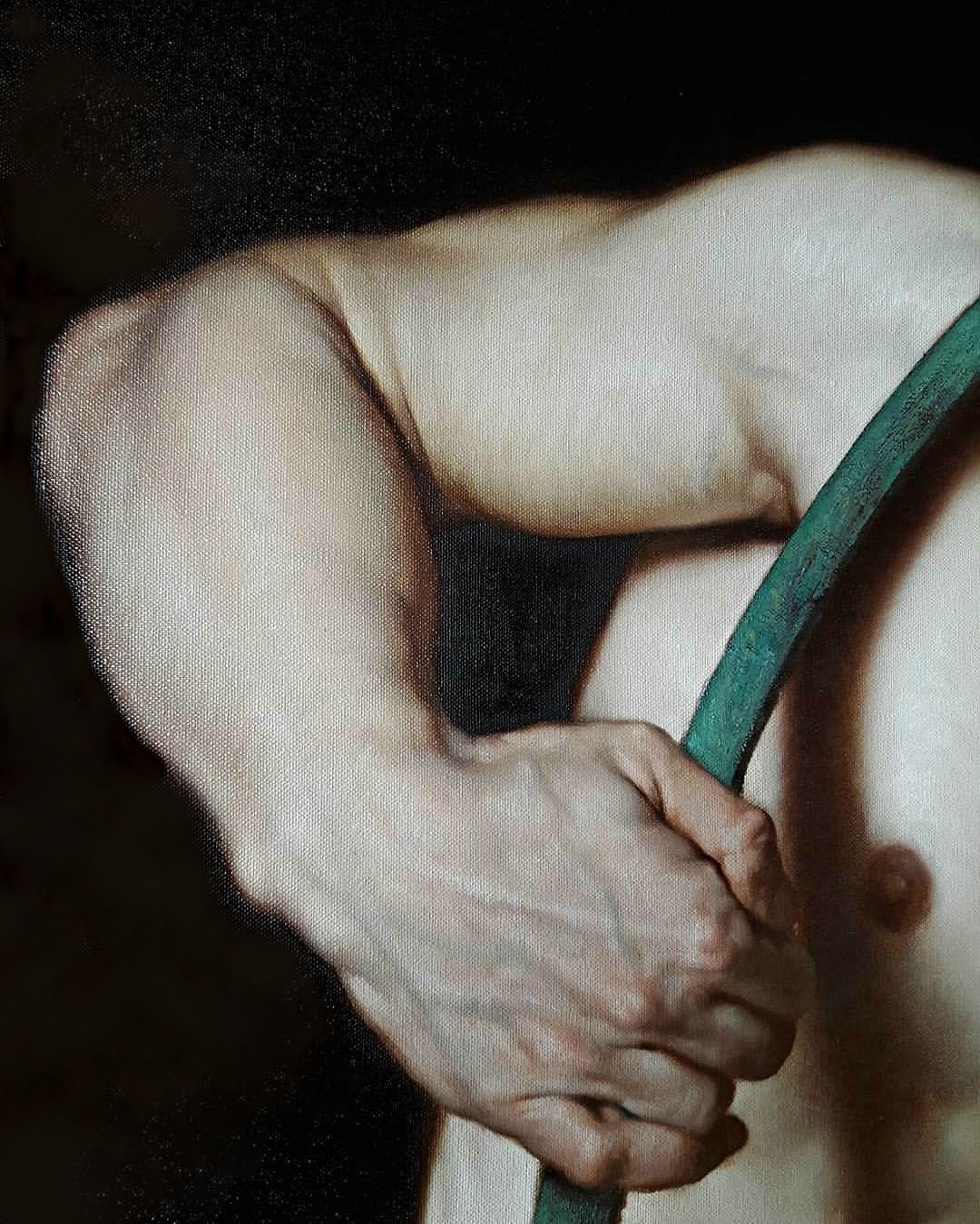
Detail : Achilles. 2017. Roberto Ferri. Italian b. 1978 oil/canvas. http://hadrian6.tumblr.com


Taisho Furisode. Taisho period (1912-1926), Japan. The Kimono Gallery. An unusual kinsha (fine crepe) silk furisode
featuring six standing cranes created with yuzen resist dyeing, with simple and
sagara embroidered highlights. Five mon (family crests), so the most formal of
furisode. This is the outer furisode of a 3-piece kasane set. What sets this
kimono apart are: the large size of the standing cranes, and the fact that five
out of the six cranes have their heads pointed skywards, an unusual direction
that the artist has taken that imparts added spirituality and impact to the
kimono canvas. Also unusual for a furisode is that the main impact of the
artwork is found on the front of the kimono. The Japanese regard the white
crane as the premier symbol of longevity and good fortune. Kimono multilayer
sets – called “kasane” – were popular among the Japanese aristocracy
during the Heian period of a thousand years ago. Over the past few centuries,
until the end of the Taisho period, such three-kimono sets were sometimes
commissioned by the premier kimono artists by wealthier families.
Traditionally, the outer kimono was black in color, the next kimono red, with
the innermost white. The contrasting colors were only visible at the end of the
sleeves, at the neck, and at times a little at the hem. This example is the
black outer furisode of the set, referred to as “uwagi”, is the one
that contained most of the embroidery details and extra attention. This outer
was created to be a little larger in size than the two inner layers, presumably
to be sure that the inner layers were well-covered. The red middle furisode is
referred to as the “first shitagi”, and the white inner one the
“second shitagi”





 A peek at the disaster