
comme des garcons

Prometheus Bound. 19th.century. Italian/Flemish School. oil/canvas. http://hadrian6.tumblr.com
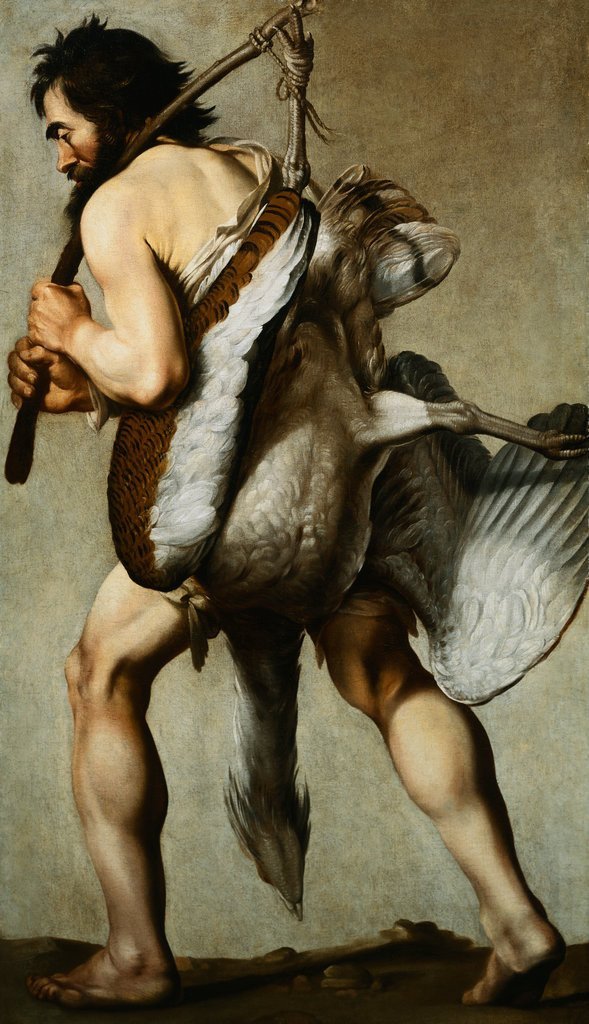
A Bearded Man Carrying a Great Bustard. 17th.century circle of Jan Gerritsz Van Boeckhorst. Dutch 1603-1662. oil/canvas. http://hadrian6.tumblr.com
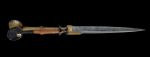
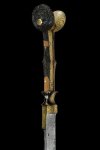


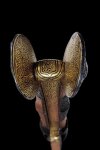

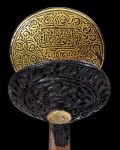


Ear Dagger
- Dated: circa 1300
- Culture:
Moorish
The dagger has a straight, single -and false-edged blade, while the base is stamped with a cross and a circle. There’s a slight fuller at the tang, gold-inlaid with fine hunt drawings (hunter, deer, wild boar, dogs and lion) on racemes. The typical, iron hilt, the band, the inside of the ears, the inside of the risers and the pommel are gold-inlaid with oriental symbols framed by arabesque. The quillon -block is covered with dark horn plaques in the shape of a hourglass, ebony grip scales, engraved with floral motifs, the plaques of the ears worked en suite, at the borders some letters looking like the “R” and the Greek “Pi”, gold rivets.
For similar daggers see “A Record Of European Armour and Arms”, Vol. III, by Sir Guy Francis Laking, pp 49 – 55, the number 827 shows the same mark and has a very similar decoration in gold. There is another similar dagger in “Blankwaffen” by Heribert Seitz, Vol. I, page 214/215. Dated 1372, it is in the National Museum of Florence and shows, a part from the same structure, a similar gold decoration.

Harold Edgerton (American, 1909-1995), Gus Solomons, 1960, Gelatin silver photograph.
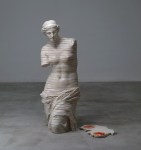
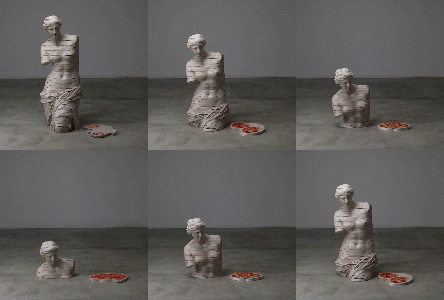


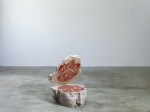


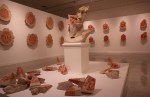
Chinese artist Cao Hui creates awesomely surreal modular resin sculptures that combine classical art and medical science. When fully assembled, they look like classical marble sculptures, but when taken apart, one linear slice or fractional piece at a time, the reveal an interior made to look like red flesh and internal organs beneath their stone skin. They’re like sculptural puzzles made of MRI scans.
‘We must not only see the surface, but also examine the inside,’ Hui describes in an artist statement, ‘and so the relationship between inner and outer crystallizes into a kind of perfect logic, explainable by our inherent ‘knowledge’. Thus we can begin to deceive others, using set after set of theoretical explanations. The result is laughter — in the end we’ve merely amused ourselves before god did.’
[via designboom]


 A peek at the disaster